In partnership with

Today in Mentor’s Corner, I'll walk you through the subtle communication habits I've picked up to build executive presence — so people take you seriously, trust your judgment, and see you as leadership material.
People only learn this stuff after years of climbing up the ranks, expensive coaching, or studying great communicators. But you get to skip all that.
Working on your resume or know someone who is? Don’t forget that you can get a free resume review here. It’ll speed up your job search.
This is Coached, my weekly career notes where I share the tiny % of ideas that actually work in real careers. It takes 5 minutes to read, but could speed up your career by years. I write this myself and I read your replies.
—Rohan Mahtani (LinkedIn). If you were forwarded this, get the next one here.
The 20-second Career tactic
I've coached people for a decade. Here's one idea that moves the needle. I teach it in 20 seconds.
My "10% different" strategy
I think a good trick for standing out professionally is just doing things slightly differently than what's expected. For example, almost everyone uses identical email sign-offs ("Speak soon"), so even a tiny tweak (like “Can’t wait to compare notes on this,”) to it makes people notice you more.
The bar is low since everyone sticks to defaults. Being just 10% different is enough. You can use this idea anywhere: meetings (e.g. come up with better conversation starters instead of ‘how was your weekend’), intros, presentations — just pick one small thing everyone does the same way, and slightly change it.

Tool Spotlight
Wispr Flow is one of the coolest tools out there. It lets you talk to any app: emails, ChatGPT, Microsoft Office, etc. Saves me a ton of time.
Ship the message as fast as you think
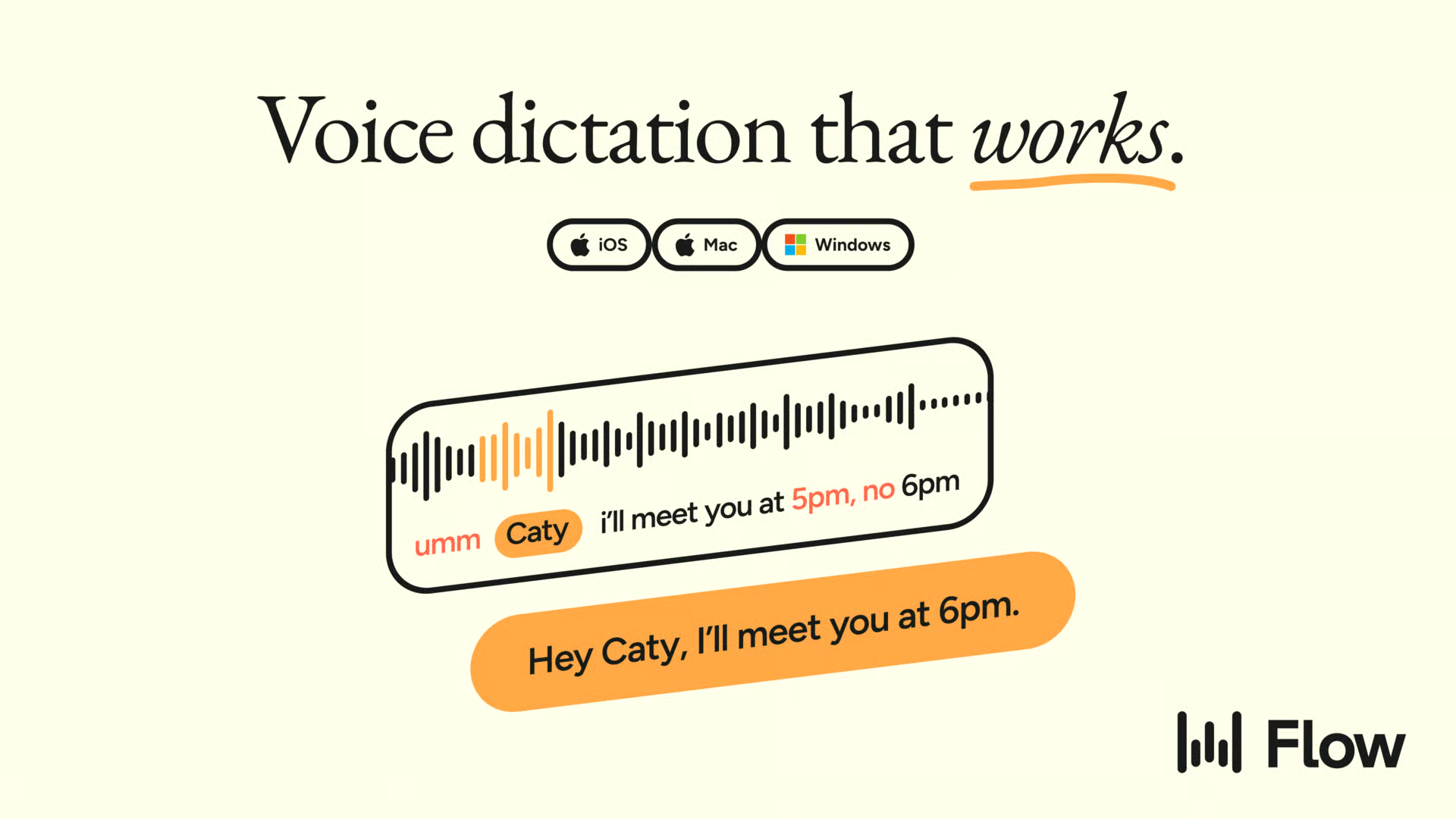
Founders spend too much time drafting the same kinds of messages. Wispr Flow turns spoken thinking into final-draft writing so you can record investor updates, product briefs, and run-of-the-mill status notes by voice. Use saved snippets for recurring intros, insert calendar links by voice, and keep comms consistent across the team. It preserves your tone, fixes punctuation, and formats lists so you send confident messages fast. Works on Mac, Windows, and iPhone. Try Wispr Flow for founders.
Mentor's Corner
Insights put together by me. One practical lesson a week that will make a measurable impact on your career, delivered right to you — for $0.
My simple tricks to improve your exec presence
We’ve all heard the saying that 90-something percent of communication is non-verbal.
But what does that actually mean?
Well, take three scenarios:
Scenario 1: You're with friends at a bar, and your popular buddy Johnny walks in. You shout excitedly, "Here's Johnny!"
Scenario 2: Your overbearing boss — who everyone secretly dislikes — walks into a meeting. You mutter sarcastically, "Here's Johnny…"
Scenario 3: Jack Torrance smashes through a door in The Shining and grins sinisterly: "Here's Johnny!"
Same words. Totally different meanings.
The takeaway? How you deliver your message completely transforms how it's received.
In your career, this matters enormously.
It can determine if you're taken seriously in meetings, trusted with bigger projects, or viewed as leadership material. It’s what I call your executive presence.
Let’s dive in:
🧍 Shrink the drama (less reactivity)
A powerful shift you can make in your executive presence is simply becoming less reactive.
Think about experienced leaders you admire: when bad news arrives, they don’t gasp, sigh dramatically, or panic. Instead, they pause slightly, nod, maybe say something neutral like “Hmm,” and then respond thoughtfully.
Big reactions signal you're overwhelmed, while calm, measured responses build trust.
Practice this with small stuff: If you spill something, try to control that instinctive “F@#!” and pause first, take a breath (and then calmly say oops if you want haha).
🔑 Finish sentences like statements, not questions
A subtle but powerful cue that separates junior from senior leaders: Notice how experienced leaders end their sentences firmly — like statements — not nervously like questions?
Compare:
“We should go with option A?”
“We should go with option A.”
For stuff you’re confident in, ditch the upward inflections at the end of sentences. Deliberately practice stating your ideas firmly and directly. You’ll immediately project more credibility.
⏳ Master pauses and pacing (the executive presence hack)
How fast or slow you speak sends its own message. When you're nervous, you naturally speed up — and speaking too quickly signals anxiety, which affects how confident you seem.
So: Try to talk slower. On calls, presentations, and conversations. Aim for even slower than you think.
You’ll automatically seem more ‘in control’. You'll also give listeners more time to digest your ideas, and give yourself time to choose your words more carefully.
There's also a second, more subtle technique executive coaches emphasize:
Take a short pause before responding in meetings (like when you get asked a question, or something)
Add micro-pauses between ideas within longer sentences:
“We have two options...” (pause briefly) “each has clear trade-offs.”
🧠 The no-interrupt rule (harder than it sounds)
When someone says something you disagree (or agree!) with, your instinct is to jump in. To correct. To defend. To clarify.
It’s very normal. But watch seasoned executives closely. They let people finish their thoughts fully, even if they disagree completely. Interrupting ruins rapport, and it’s hard to kickstart it if someone loses their train of thought.
Interestingly, introverts naturally excel at this skill. I see this in the data on the Coached impact assessment — if you haven’t done it, I’d recommend it.
You’ll get a personality type (like Myers-Briggs), but science-backed and actually helpful. It will tell you more in 20 minutes than 10 sessions with a career coach.
Get your strengths and blind spots
🧠 How to listen (without being awkward)
Okay, so you're not interrupting anymore. Great. But wtf do I do instead??!
What works:
Research shows that stuff like small nods, slight smiles, and acknowledgments (“mm-hmm”) dramatically improves conversational flow.
Just don’t overdo it or you’ll look like a bobblehead. Especially if you're naturally quiet or introverted, these small habits go a long way.
Here are a few more non-verbals to pay attention to (I’ll keep these short!):
Posture: doesn’t need a full lecture. Slouching reads as low energy. Shoulders back, spine supported.
Eye contact: Steady eye contact adds weight. If it feels awkward, look at the bridge of the nose.
Fidgeting: spinning pens, rings, tapping — I’m guilty too. It leaks nervous energy.
Feet planted: sounds silly, but standing or sitting with feet grounded makes you look more composed.
Hopefully you’re able to use this stuff as soon as today! If you enjoyed this:
Forward it to a friend, family member or colleague. It does truly make a difference.
If someone you know is on a job search, tell them to check out Resume Worded. It’ll make their job search a lot shorter.
Speak soon,

Rohan Mahtani
Founder at Coached & Resume Worded
Btw, I like reviews. They motivate me to keep the quality high. Like this recent one:
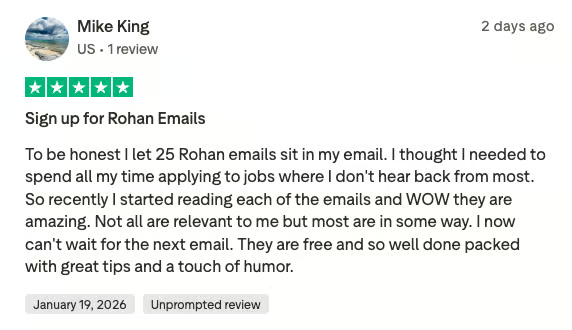
listen to Mike! don’t let my emails just sit there - I work really hard to make sure each essay has a couple of things you can start using right away. 🙂
and thanks for the review Mike!
You can leave one here. I’d appreciate it. Thank you so much.
🤭 In all unseriousness
Career advice doesn't always have to be serious so here's some fun memes
🤣 In 2026, you don’t need to write cover letters anymore — if you have the right tools. This AI cover letter tool is really good. It’ll write entire ready-to-go cover letters that actually have personality (the best part: unlike ChatGPT, it writes letters that are engaging and don’t sound like AI).
Try it just once for a job you actually want — see how good it is for yourself.
⚡ Try our career tools
How strong is your resume?
Find out your resume's score based on millions of real data points


Is your LinkedIn profile getting you rejected?
Our AI tool will fix yours in a couple of minutes.


If you’re new here, join at Coached.com to get the next one. If you want the web version, it’s at the top of my list of essays here.