Today’s Mentor’s Corner is at the intersection of two things I love: career advice and tennis. I’ll take you through some things I’ve learned from my favorite tennis player of all time, Roger Federer. It turns out, tennis has incredible parallels with navigating the challenges of our professional lives.
Something I'd recommend doing this week: if you haven't done our personality assessment yet, do it. It's 3 minutes and tells you a lot about how you think, work and deal with people. It's based on decades of psychology research. Normally you'd pay $50–100 for this, companies pay even more. It's free, I'm covering it.
Take the test → (Already done it? Try the new “match” tool - add a friend/partner and you get an entirely new report, that explains your dynamic and why you naturally click - or not!)
This is Coached Weekly, my career notes where I share the tiny % of ideas that actually work in real careers. It takes 5 minutes to read, but could speed up your career by years. I write this myself (no AI) and I read your replies. —Rohan Mahtani (LinkedIn)
Want to log in to Coached or see your personality assessments? Login.
The 20-second Career tactic
I've coached people for a decade. Here's one idea that moves the needle. I teach it in 20 seconds.
Study what good people actually do
One of the least useful things you can say about someone is: “They’re just naturally good at it.”
Say someone is a great presenter. Watch them properly and you might notice they start with the conclusion, pause instead of filling silence, and use one example instead of five. Those are things you can steal.
Do this with any skill you want to get better at. Don’t ask “how are they so good?” Ask: “What are 2-3 things they are doing that I’m not?”
You won’t be able to copy everything. Some people really are more naturally charismatic, analytical or creative than others. But “talent” often hides a bunch of smaller behaviours you can learn. Admire people less vaguely. Study them more specifically.

Mentor's Corner
Insights put together by me. One practical lesson a week that will make a measurable impact on your career, delivered right to you — for $0.
What Roger Federer understood about getting better
In his commencement speech at Dartmouth, Roger Federer described an unusual decision he made at the 2003 ATP Finals.
Normally, he would attack an opponent’s weakness. If someone had a dangerous forehand, he’d keep sending the ball to their backhand. Why give the other guy the shot he most wanted to hit?
But at this tournament, Federer tried beating his opponents at their strengths. He attacked the attacking players and challenged the baseliners from the back of the court.
He wanted more options, he explained. If one part of his game stopped working, he needed another way to win.
There’s a useful question in that for anyone who’s been doing something for years: does your experience keep expanding what you can do, or have you become very good at getting by with the same few skills?
🎾 You can get very good at avoiding what you’re bad at
Suppose you’re uncomfortable telling people no. Over time, you might become excellent at accommodating them. You rearrange your schedule, find a compromise, or quietly do the extra work yourself.
People appreciate it. You get a reputation for being helpful and dependable. Which makes the habit harder to question: it’s working, and you’re being rewarded for it.
But you still can’t tell someone no. You’ve become skilled at everything you do to avoid it!
I think this is a particular trap for high achievers. You’re used to doing well, and you like people seeing you that way. So you keep choosing situations where you’re likely to succeed. You can be willing to work incredibly hard while being surprisingly unwilling to be bad at something.
That’s worth checking in yourself: what do you keep avoiding because you don’t want to look inexperienced? If getting better at it would open up opportunities you want, it deserves some practice, even if you suck at it first.
🏆 You can lose a lot and still be doing well
Federer won almost 80% of his matches. But each match contains many individual points, and across his career, he won only 54% of those. One of the greatest players ever was losing nearly half the points he played!
Federer’s way of handling this was to remind himself: “It’s only a point.” Care about it while you’re playing it, then move on.
I love the parallel to careers. A great career doesn’t mean always “winning”. You’ll do work that goes nowhere, miss opportunities, and make decisions you wish you could take back. And that’s exactly how it should go! You just need enough things to work over time.
But we expect to win WAY more consistently than that. (Seeing everyone else’s highlights online every day doesn’t help). The trouble is that expecting everything to work eventually changes what you’re willing to try.
If you are trained to not get bad feedback, you stick to things you’re already good at. And you don’t try enough new things that could be huge sources of fulfilment.
This newsletter has been that for me. When I started it six years ago, my writing was poor! Now it’s one of the most fulfilling things I do, and I could easily have ruled it out as something I wasn’t good at.
📦 The world boxes you in
Once you're good at something, people give you more of it. For example, a manager has a project and will ask the person who’s done it well before. That's reasonable from their side: they want a good job done and you’re reliable!
But it means you can keep getting known for the same few things. Job titles reinforce this. Someone looking for marketing ideas probably won’t think to ask the “Software Engineer,” however creative they might be.
So you're going to be put in a box whether you like it or not. The real question is whether you get any say in which one, and how big it is.
And you do!
Tell people - like a manager - what else you want to get involved in, and let them see you doing some of it. That’s also one reason to make things outside your day job: write publicly about an interest, build something, make a personal site (e.g., see mine for inspo!). You give people something to associate with you beyond the work they already know.
🤖 Don’t dismiss AI
There’s a lot of concern about AI making us less creative or doing our thinking for us. But I think one of its best uses is helping us get into things we know very little about, and getting out of our “box”.
Often, you know what you want to make, but one part is beyond you. You can write the story but can’t illustrate it. You understand a problem but don’t know how to build a tool to solve it. That missing skill can stop you using the skills you already have.
AI can help you attempt the whole thing. Ask it to explain the unfamiliar parts, help you make a first version, and work through what isn’t working. You’ll retain a lot of your decision making, but you can finally fully use the skill you have.
So before ruling something out as “not your thing”, try it with some help!
I hope you learned a thing or three. If you enjoyed this:
Forward it to a friend, family member or colleague. It does truly make a difference.
If someone you know is on a job search, tell them to check out Resume Worded. It’ll make their job search a lot shorter.
Speak soon,

Rohan Mahtani
Founder at Coached & Resume Worded
Btw, I like reviews. They motivate me to keep the quality high. Like this one:
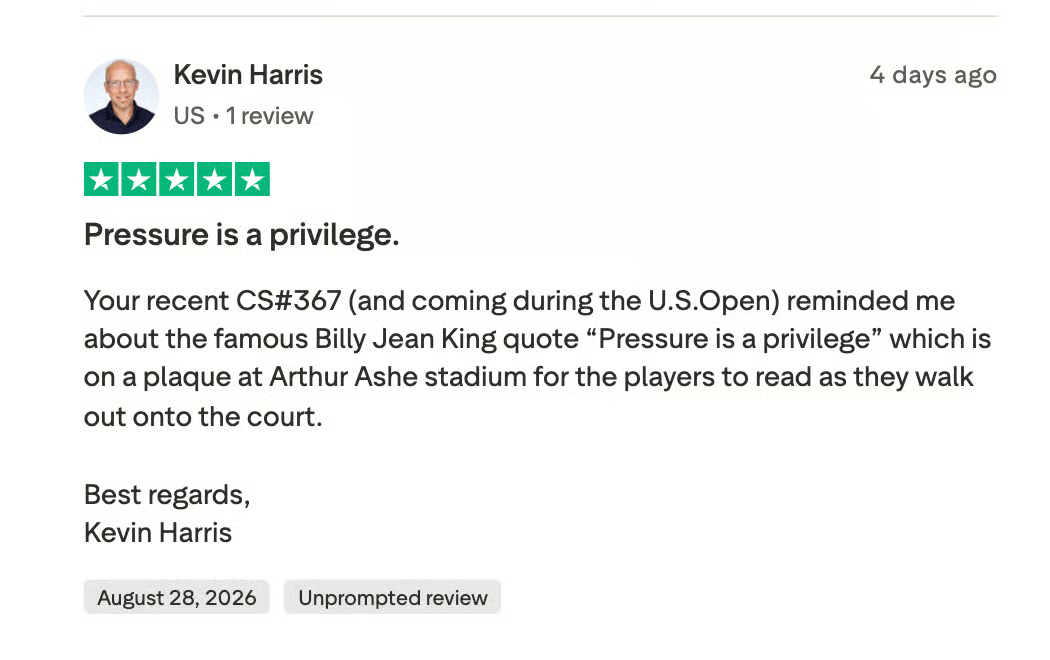
Hope the US Open was awesome, Kevin! So excited for Tiafoe vs Shelton on Saturday.
You can leave one here. I’d appreciate it. Thank you so much.
🤭 In all unseriousness
A few laughs to keep you smiling until next week
Don’t waste your time actually writing cover letters from scratch for each and every application. That doesn’t mean you should use ChatGPT/Claude though - they have tells which make it obvious to any hiring manager that it’s written by AI.
Use something like this AI cover letter tool that writes cover letters for you - it creates a story using your background that will fit what employers look for.
⚡ Try our career tools
How strong is your resume?
Find out your resume's score based on millions of real data points


Is your LinkedIn profile getting you rejected?
Our AI tool will fix yours in a couple of minutes.


If you’re new here, join at Coached.com to get the next one.