I hope today’s Mentor’s Corner sticks with you. It’s about regret – what actually comes back to bite people in their careers, and how you can use that to make better calls.
Job searching or know someone who is? Don’t forget that you can get a free resume review here. It’ll speed up your job search.
This is Coached, my weekly career notes where I share the tiny % of ideas that actually work in real careers. It takes 5 minutes to read, but could speed up your career by years. I write this myself and I read your replies.
—Rohan Mahtani (my LinkedIn)
The 20-second Career tactic
I've coached people for a decade. Here's one idea that moves the needle. I teach it in 20 seconds.
How to say no without saying no
If you're good at your job, people inevitably ask for more of your time. But directly saying no can seem unhelpful, while saying yes to everything hurts your actual priorities.
A better move is kinda agreeing - but immediately making them own the trade-off:
"Sure, should I pause [important task] to work on this?"
This shifts prioritization back onto them. You've said yes, but they have to consciously decide what's more important.
You spend ~80,000 hours of your life working. Spend 20 minutes checking if you’re doing it right. Get a clear breakdown of your strengths, blind spots, and the specific roles you are naturally built for.
It’s a very high-leverage 20 minutes. Do the Coached assessment →

Mentor's Corner
Insights put together by me. One practical lesson a week that will make a measurable impact on your career, delivered right to you — for $0.
How I deal with regret in my career
In 1994, Jeff was at a crossroads.
He’d recently been promoted to senior VP at an investment bank (the youngest in the firm's history), and was earning handsomely.
But something gnawed at him:
The internet was growing 2,000% a year, and he couldn’t stop thinking about quitting to start a virtual bookstore.
So he ran the idea by his boss.
“Sounds like an amazing idea”, his boss said, “...if you had nothing to lose. But risking senior VP?”
He gave Jeff 48 hours to decide. To avoid making the decision on a whim, Jeff went home and created a framework to guide his thinking:
🥅 “The regret minimization formula”
The idea’s simple: Project yourself forward to when you’re 80, and think, “Which decision would I regret least?”
Suddenly, Jeff’s choice was obvious. He left his firm, started Amazon, and now, 30 years later, Jeff Bezos is the world’s 3rd richest man.
Of course, not every decision turns us into billionaires, but this framework's still useful: figure out what you'd regret most later, and do something about it right now.
The only question is....what *will* you regret in the future?
Luckily, author Daniel Pink has some clues.
In his research for The Power of Regret, Pink asked 19,000 people around the world what they regretted most.
And to Pink’s surprise, all of them basically said the same four things:
1) “I didn’t put in the work.”
Pink calls these foundation regrets, and they're exactly what they sound like: regrets about neglecting basic, foundational things — like your health, finances, or relationships.
Maybe you didn’t save money when you could’ve. Maybe you skipped workouts or kept putting off sleep. These regrets hurt because deep down you know you could've avoided them.
The fix here isn't complicated: Step back, reprioritize, and get the basics right again.
2) “I was too scared.”
These are regrets about playing it safe when you had the chance to take a risk. Bezos’s decision fits this, but they can be smaller things too. Like approaching someone interesting, speaking up in meetings, or trying a hobby that scares you.
They sting because you'll never know what might've happened. And usually, the real 'risk' was smaller than it felt at the time.
A practical fix? Treat courage like a muscle. Train it. Write down things you want to try but haven't because they scare you. Start with the small ones.
3) “That didn’t feel right.”
Your boss leaves the room, and you criticize him behind his back. How do you feel afterward?
That's moral regret.
To avoid this:
Make clear “I don’t” rules. e.g., I don’t gossip behind backs. I don’t accept jobs purely for money. I don’t work for companies making people's lives worse.
4) “I should’ve reached out.”
You know you should message a friend but don’t, afraid it’ll feel awkward. Gradually, the relationship fades. That’s connection regret — the one I’m trying to work on.
My framework: If you think of someone, reach out. If a random memory with someone pops in your head and makes you smile, text them!
🤔 What if I let myself be happier?
Bronnie Ware was a nurse who cared for people on their deathbeds. The biggest regret she heard repeatedly? “I wish I’d let myself be happier.”
Notice how they phrased it — "let myself." We tend to think happiness is something we'll finally earn after we hit a random future milestone: after a promotion, after the next job, after some $ number.
So we postpone it, or worse, sabotage it daily by getting annoyed over things we'll soon forget.
But in doing so, it’s easy to forget that happiness is something you allow yourself now.
And maybe that's the real takeaway here:
If you already know what you'll regret later, why not do something about it today?
I hope that shifts your thinking a bit. If you enjoyed this:
Forward it to a friend, family or colleague. It does truly make a difference.
If someone you know is on a job search, tell them to check out Resume Worded. It’ll make their job search a lot shorter.
Speak soon,

Rohan Mahtani
Founder at Coached & Resume Worded
Btw, I like reviews. They motivate me to keep the quality high. Like this recent one:
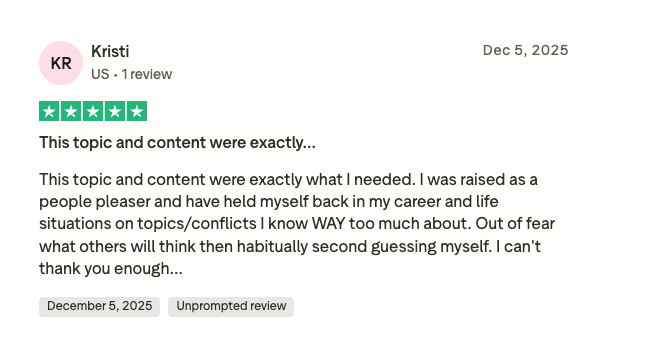
You can leave one here. Thank you so much.
🤭 In all unseriousness
Here's the dessert. Career advice doesn't always have to be serious...let's have fun!
🤣 BTW: you shouldn’t be writing your cover letter from scratch anymore. Instead, for a real, actually good cover letter, use this AI cover letter tool. It’ll write cover letters that actually have personality and don’t sound like AI — unlike ChatGPT.
Try it just once for a job you actually want — see how good it is for yourself.
⚡ Try our career tools
How strong is your resume?
Find out your resume's score based on millions of real data points


Is your LinkedIn profile getting you rejected?
Our AI tool will fix yours in a couple of minutes.


If you’re new here, join at Coached.com to get the next one. If you want the web version, it’s at the top of my list of essays here.