Happy Thursday! Appreciate the wonderful feedback on last week’s new format. So let’s run it back: five short ideas you can use in life, instead of one long essay. Reply and tell me your favorite :)
This is Coached Weekly, my career notes where I share the tiny % of ideas that work in real careers. It takes 5 minutes to read, but could speed up your career by years. I write this myself (no AI) and I read your replies. —Rohan Mahtani (LinkedIn)
Want to log in to Coached or see your personality assessments? Login.
01 / FROM THE LAB
There’s no such thing as “a creative person”
Our research lab and I dug into the science of creativity recently. We looked at data from 3,841 people across ten areas, like music, writing, and science.
This finding was pretty fascinating:
Being creative at one thing does not make you creative at others. You would think it does - if someone’s a super-talented artist, you’d expect some of it to transfer over to another discipline. But it doesn’t.
In the data, someone could be a brilliant musician and a completely terrible cook, and a talented painter was no more creative at science than someone who can’t draw at all.
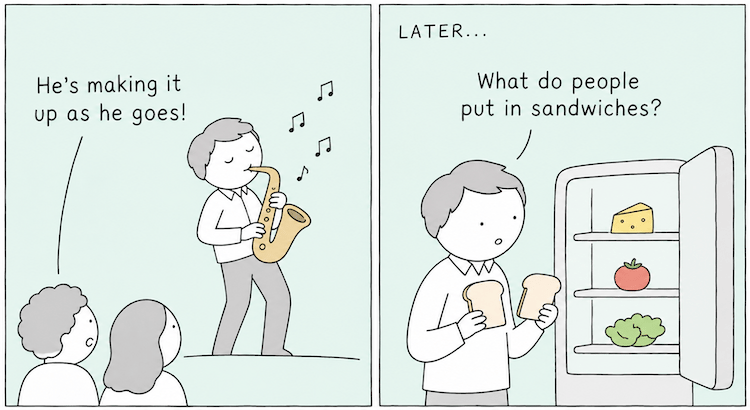
So when we call someone “a creative person,” what we really mean is that they’re creative at one or two particular things. That goes for everyone, including some of us who decided we weren’t “creative” because we sucked at artistic stuff!
One more thing this tells us is the secret to getting more creative. Go deeper, not wider. The more you know a subject, the more “creative” you’ll be, because you notice what could be done differently in it.
All of our findings went into the newest thing from our research lab: a science-backed creativity test. It takes ~2 minutes, it’s free, and I think the science behind it is pretty novel: coached.com/creativity-test
Do me a favor: if you find it interesting, share it with someone or with your network. It took the team a lot of effort and we’re releasing all of it to the public for free, so we’d really appreciate the share!
02 / CAREER
Ask for what you want, far more often than feels comfortable
It sounds too simple to count as advice, but very few of us do it, and the payoff is lopsided.
Researchers at Columbia found that people significantly underestimate how likely others are to say yes to a direct request. We assume it’s easy for them to say no. But in fact, saying no is more awkward, so people end up saying yes a lot.
So most of us never find out what’s *really* available to us, because we never test it.
What’s lopsided about it is that a “no” usually costs a few seconds of mild discomfort and leaves you where you started. A “yes” can mean a promotion, referral, introduction, a second date, or just something you didn’t know you could get. It also gets easier, because each ask shrinks the fear of the next one.
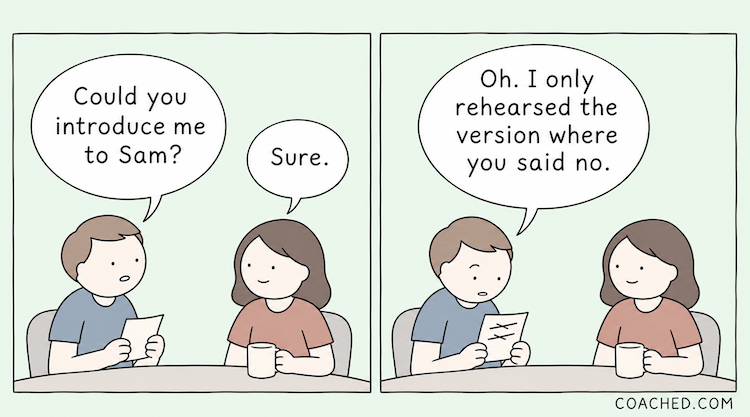
It also takes little skill and no money, only a moment of discomfort that most people will do almost anything to avoid.
03 / GOALS
Give your habit two skips a week
Say you want to walk more. Which goal would you set?
A. Hit my step target five days a week.
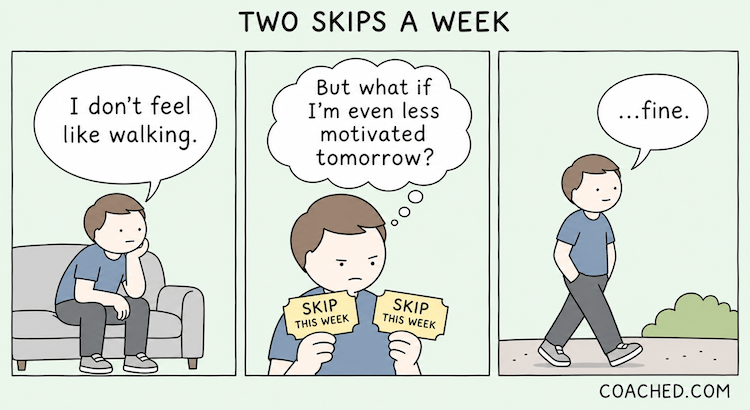
B. Hit it every day, with two skips I can use if I need them.
Both ask for five days of walking. But when researchers at UCLA tested it, people with goal B walked 4 days a week, and people with goal A managed about 3. The people with the skips were 33% more successful!
(A third group was told “every day, no skips.” They did worst, at 2.8 days.)
You should use this psychological trick when you decide your own habits. For example: you want to read every night before bed. Make it every night, with two skips a week. On a tired Tuesday, you’ll ask yourself whether tonight is worth a skip, and often it isn’t.
04 / FULFILLMENT
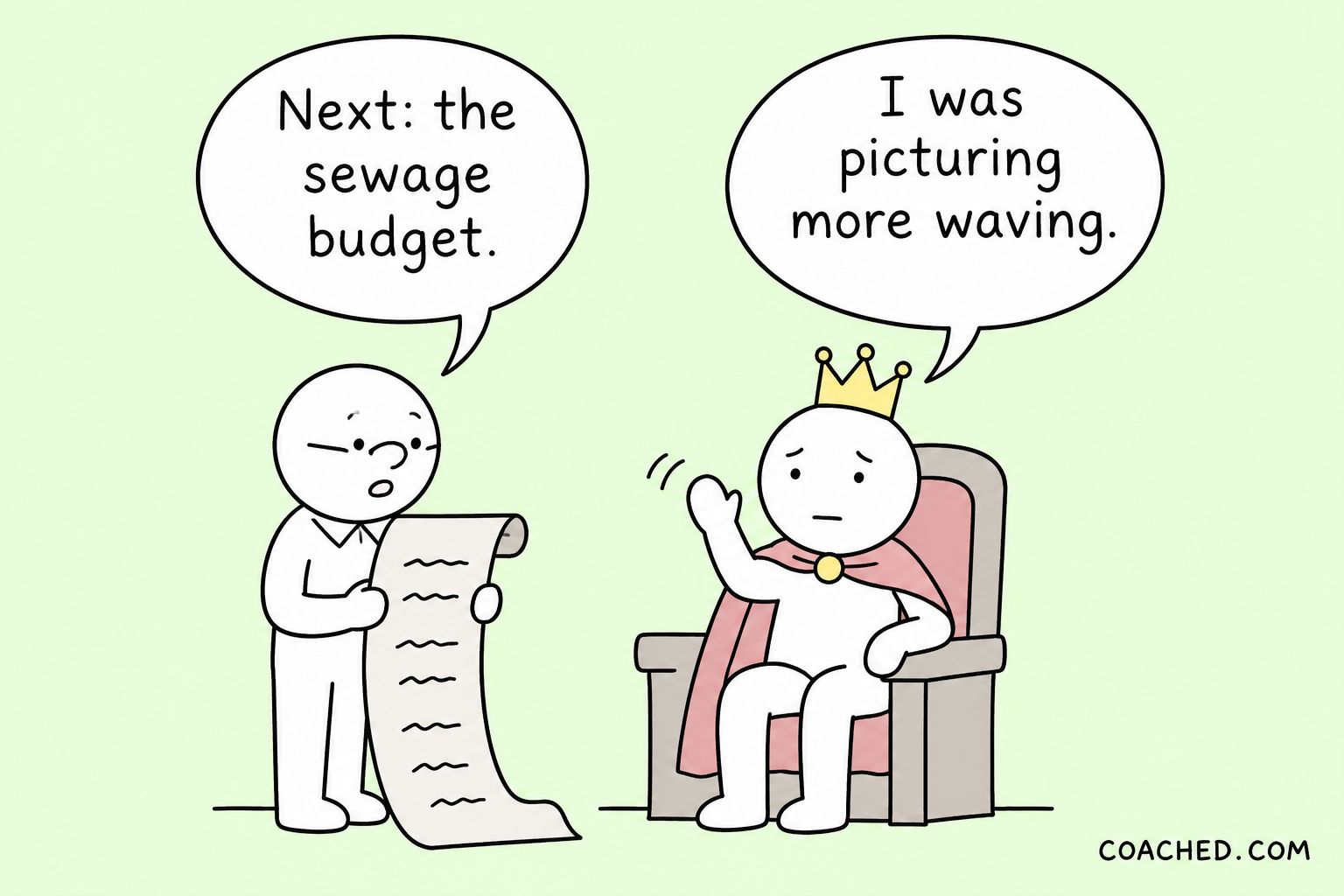
Would you enjoy the day-to-day of your dream?
The psychologist Adam Mastroianni likes to ask people what they’d do if they could do anything. A lot of them say: “I’d really love to run a little coffee shop.”
So he asks a follow-up: “How would you pick the coffee beans?” And then: “How much does a La Marzocco espresso machine cost?”
His point: “if you can’t answer those questions, if you don’t even find them interesting, then you should not open a coffee shop.” The dream is a cozy room with regulars, but the days are mostly suppliers, prices and equipment.
He calls this unpacking. You take the thing you want and list what you’d actually be doing all day.
For example: you’d love to write a book. Unpacked, that’s sitting alone most mornings for a year, rewriting the same chapters. Does that sound good to you?
It works the other way too. If there’s daily work most people find tedious and you’d happily do it, pay attention to that. And if you’re the one who wants to compare espresso machines, open the coffee shop!
05 / LEARNING
Get the obvious parts right first
I love this:
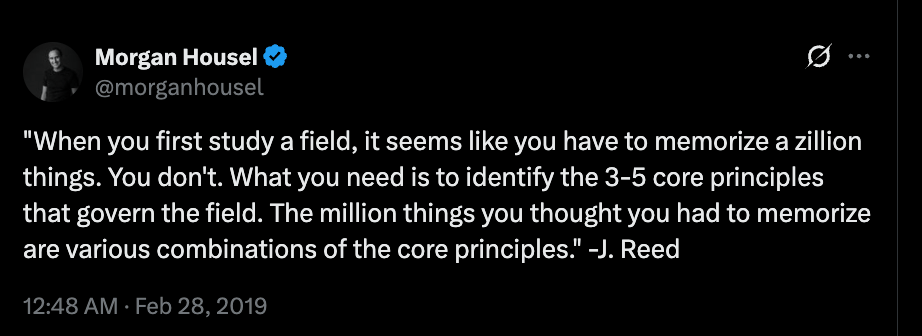
When something’s new, it looks like a thousand things to learn. But most things simplify down to a handful of basics. For example:
a) Cooking: There are millions of recipes, but one chef wrote a whole book on the idea that good cooking is four things: salt, fat, acid and heat.
b) Languages: Learn the 100 most common words (which, surprisingly, make up ~50% of all written material).
c) Resumes: Make sure each line shows you’ve made an impact, use a straightforward template, and show it’s been tailored for the role (P.S. Resume Worded does this all for you pretty quickly -- get a free resume review here).
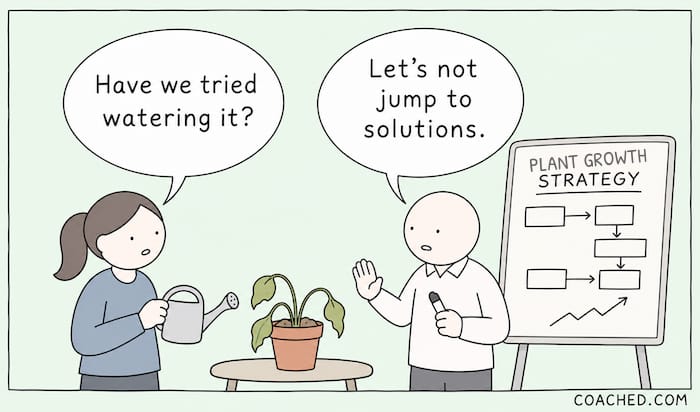
So when I’m confused by a lot of different directions, I love to ask: what’s the boring, obvious answer here? Start there. The clever stuff works a lot better on top of it!
What did you think of the new format? I hope you learned a thing or five. If you enjoyed this:
Forward it to a friend, family member or colleague. It does truly make a difference.
If someone you know is on a job search, tell them to check out Resume Worded. It’ll make their job search a lot shorter.
Speak soon,

Rohan Mahtani
Founder at Coached & Resume Worded
Btw, I like reviews. They motivate me to keep the quality high. Like this one:

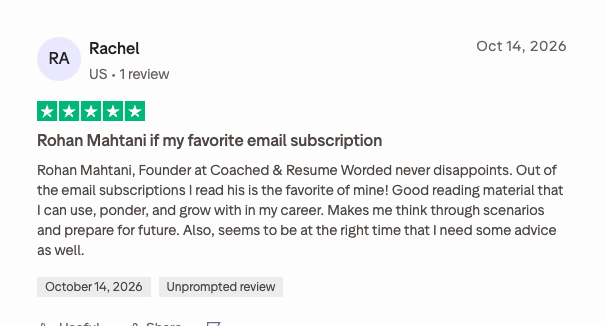
You can leave one here and I’ll feature it next time. I’d appreciate it. Thank you so much.
🤭 In all unseriousness
A few laughs to keep you smiling until next week
Don’t waste your time actually writing cover letters from scratch for each and every application. That doesn’t mean you should use ChatGPT/Claude though - they have tells which make it obvious to any hiring manager that it’s written by AI.
Use something like this AI cover letter tool that writes cover letters for you - it creates a story using your background that will fit what employers look for.
⚡ Try our career tools
How strong is your resume?
Find out your resume's score based on millions of real data points


Is your LinkedIn profile getting you rejected?
Our AI tool will fix yours in a couple of minutes.


If you’re new here, join at Coached.com to get the next one.
The answer to the quiz in the In all unseriousness question:
Alphabetical order: eight, five, four, nine, one, seven, six, three, two, zero.