Ok, friends. It’s Rohan. I’m back with the next issue of Coached — your personal coaching email that’s a 5-minute read, but speeds up your career by years.
We're often our harshest critics. But what if we could change that? In today’s Mentor’s Corner, we're exploring ways to quiet that inner critic. Also, if you’re on a job search, read the resume advice in the bottom half of the email.
Estimated read time: 4 minutes 35 seconds
Is your resume the problem?
Use Resume Worded to find out. In 2 minutes.


📈 Mentor's Corner
Insights put together by me. One practical lesson a week that will make a measurable impact on your career, delivered right to you — for $0.
The career advice that finally silenced my inner doubter
In The Lord of the Rings, there’s a creature called “Gollum” who has two personalities:
An “evil” version (called Gollum), who will stop at nothing to get the Ring, and a “good” version (called Smeagol), who wants to be free from the Ring’s power, and live a normal life. In the movie, you see the two battling it out in pretty dramatic fashion.
(I was going to put a picture of Gollum here but why traumatize you?)
Now…I know this is gonna sound a little weird…
We all have our own "Gollum" when it comes to our careers.
We have a “good” voice inside us…that pushes us to apply for challenging jobs, send out cold emails, publish Linkedin content, go for promotions and set boundaries.
And then there’s the “evil” voice… which whispers things like:
😈 Why on Earth would anyone want to hire you?
😈 You don’t deserve a raise so why ask?
😈 No one’s gonna read your content, it’s so cringe!
😈 You’re only gonna fail miserably and look stupid - what’s the point in applying?
And imo?
The extent to which you ignore or defeat this negative voice determines how satisfying and successful your career becomes.
So, how do we defeat our inner Gollum?
Here’s a few thoughts.
🥷🏿 Recognize it's not really you
It helps to think of these negative thoughts as something separate from yourself. They aren’t "true." They’re just self-critical thoughts that pop into your head. You don’t need to understand exactly where they come from to acknowledge they're not helping you.
There’s an old saying: "Everyone has two wolves fighting inside them. One is good, one is bad. Which wolf wins? The one you feed."
In other words, give attention and credibility only to the thoughts that encourage you.
〰 Notice the negativity clearly
We can’t defeat what we don’t notice. The tricky thing is, negative thoughts can disguise themselves as practical or even helpful advice:
You might say, "I'm just being realistic," when, in reality, it’s your inner “Gollum” trying to hold you back.
Or, say your goal is to speak up more in meetings: When you get a chance to speak up, a thought might pop up like, “Maybe I should wait until I’m more prepared.” Sounds fair. Or is it?
If these thoughts go against your goals, they're probably your inner Gollum talking.
If your intention is to become more sociable and network more, thoughts like:
😈 “They’re just gonna reject me.”
😈 “He’s gonna think I’m desperate.”
😈 “Uhhh, this is such a stupid idea.”
… are clearly negative and unhelpful.
Start consciously noticing these thoughts. When you catch yourself thinking negatively, pause and label it clearly: "That’s my Gollum talking."
Then, once you recognize the bad thoughts…
🙅♂️ Call it out as a lie (out loud)
Noticing the negative thoughts isn't enough. You have to explicitly call them out. Whenever you catch your Gollum whispering doubts, simply say out loud
“That’s a lie.”
(Because it is).
Repeat this throughout the day, 10, 20, 30 times. Keep a notebook, perhaps, and put a tally mark everytime you say it. Try to root out 5 lies in your thinking per day.
🤛🏻 Counter with evidence
Negative thoughts often rely on sweeping generalizations, like "I ALWAYS mess up presentations." Or "I’m NEVER going to get hired."
Here’s what I do.
Say I’m struggling to write one of these emails (happens way too often). My “Gollum” might say, “This essay sucks” or “ugggh is anyone even gonna read this.”
Lies! Just because I struggle to write one email doesn’t mean “I can’t write to save myself."
Then, I’ll try to counter with some evidence by thinking of good emails I DID write, then maybe read through nice replies/reviews. This way, I’m not just calling out lies, I’m feeding the good.
My recommendation is to do the same. Keep a "brag doc". Save emails where people say good things about you. Or write down your wins somewhere. When your inner Gollum starts lying, pull out that doc and remind yourself that you’ve done it before — it really does work.
Even LeBron James does this — he watches his old basketball highlights whenever he hits a slump and needs to ‘find his game’:
🔜 Add “yet”.
A very simple counter-attack is the word “yet”.
“I can’t do this.”→ “ I can’t do this yet.”
“I’ve got no idea what to do.” → “I don’t know what to do yet.”
Don’t dismiss it. This tiny three-letter word is a great way to reframe setbacks as lessons. Instead of "That presentation was a disaster," try "That presentation didn't go as planned, but now I know how to better prep next time."
🐝 You're in good company
Even Beyoncé, who commands massive stages effortlessly, described herself as naturally shy and introverted.
So how does she do it? She created an alter ego, Sasha Fierce. When she needs to perform, she "becomes" Sasha Fierce - her confident, fearless self. She basically says, "Alright, inner Gollum, BYE! Sasha's got this."
You can do the same. Identify one or two traits you admire but struggle to embody. Actually name it. Imagine what they'd do in your situation.
Would Badass Barbara second-guess her ideas in that meeting?
Would Confident Carl hesitate to ask for that raise?
It might feel weird at first, but there’s science that backs it up too. I wrote more about alter-egos here.
🫵 The only enemy you have to defeat
It’s easy to believe the main battles in our careers are external — with bosses, colleagues, or clients. But as the old African proverb says,
“When there is no enemy within, the enemy outside can do us no harm.”
And that’s a wrap today. If you found this useful, please do any of the following:
Tell me what you think about my emails. I basically read your reviews every time I write these - they’re basically my brag doc!
Tell a friend/colleague. I put a lot of hours into each essay and it’s fulfilling to see them reach as many people as possible.
Forward this email to someone who’d enjoy it — here’s the link if you want to post it somewhere: https://coached.com/essays/silencing-your-critic/

🔎 Speed Up Your Job Search
One actionable piece of advice to help you hack your job search.
"My job isn't a numbers job" - why your resume STILL needs them
You've probably heard the advice: a good resume has numbers. Quantify your impact. Show metrics.
But one of the most common pushbacks I get is: "My job isn't a numbers job. I'm not in sales/finance. I don't have revenue numbers or $ figures or whatever."
Fair enough. But here's what you're missing: there are other numbers you can add.
(And btw, if most people in your field think there are "no numbers" by default, you adding them will really differentiate your resume.)
Let’s look at an example with no numbers (this resume won’t go far):
❌ Designed email templates for the marketing team
❌ Coordinated website redesign project
Here’s how I might add numbers (everyone has these):
✅ Designed an email toolkit and style guide to enable teams to quickly build mobile-responsive emails and maintain visual consistency; led to time savings of 5+ hours per week (time saving is an easy one you can estimate)
✅ Coordinated 6-month website redesign, working with 12 people across design, engineering, and marketing teams (project length/complexity/size of your team show hiring managers the kind of scale you worked with)
Try to choose metrics that are related to your industry. So, if you work in customer service, the best metrics are linked to tickets closed or accounts handled. And if you’re a lawyer, talk about the scale of deals you worked on.
Upload your resume here. Our AI knows the best metrics to use for every industry, and will rewrite your resume using them. Use the Resume Rewriter features in the tool to rewrite each experience on your resume.
Stop applying to jobs with a bad resume!
Optimize it once for free.
🤭 In all unseriousness
🤣 BTW: you shouldn’t be writing your cover letter from scratch anymore. Instead, for a real, actually good cover letter, use this AI cover letter tool. It’ll write cover letters that actually have personality and don’t sound like AI — unlike ChatGPT.
Try it just once for a job you actually want — see how good it is for yourself.
🫵 Before we wrap up
What'd you think of today's edition?
🤢 You didn't bring enough value.
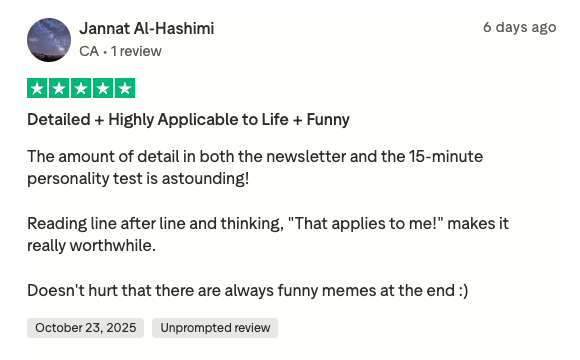
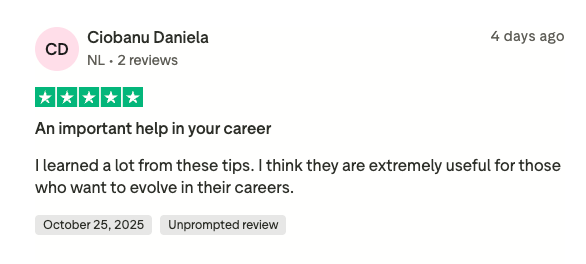
Here’s a review of my last email. Leave one here. You’ll be in good company :-)
If you missed it last week, see it here.
And if you’re new here, join at Coached.com to get the next one.
Until next time,

Rohan
Founder at Coached & Resume Worded