Ok, friends. It’s Rohan. I’m back with the next issue of Coached — your personal coaching email that’s a 2-minute read, but speeds up your career by years.
Introverts, gather 'round (quietly, of course). Today's Mentor's Corner is for you. we're exploring how to win in your career without changing who you are. If you've ever felt out of place in a world that seems to reward the loudest voices, you’ll take a thing or three away from this.
Quick ask: I spend a big chunk of my week writing them, but keep them free. In return, I just want you to spread the word. Two ways:
Know someone who’s on a job search? Tell them to check out Resume Worded. They can get a free resume review here. It’ll turn their resume into one that actually works.
Forward this email to a friend or family member if you think they’d get value from it.
Estimated read time: 3 minutes 50 seconds
How good is your resume?
Use Resume Worded to find out. In 2 minutes.


📈 Mentor's Corner
Insights put together by me. One practical lesson a week that will make a measurable impact on your career, delivered right to you — for $0.
How I win the career game as an introvert
In the movie Coach Carter, the Richmond Oilers are getting destroyed in the basketball state championships. Coach Carter calls timeout and tears into his team:
“All season long, we played OUR game. Right now, you’re playing theirs!
“When we step on the floor…we run the ball, we pressure the ball.. and most importantly, WE control the tempo of the game!!”
“WE make THEM play Richmond Oiler ball!”
The takeaway?
You rarely win by playing other people’s games. You win by playing your own.
And this is exactly the problem introverts face at work. Everyone tells you to play the extrovert game - "Speak up!" "Work the room!" "Network aggressively!"
But I think that’s bad advice. Instead, you’d be much more successful (and more content) by learning to play your own “introvert game.”
(Because as author Susan Cain points out, there’s a reason why a huge number of CEOs are introverts.)
So how do you play the introvert game?
Here's my 2 cents:
〰 You don't need to be loud to have impact
The biggest lie introverts are told: if you're not speaking up constantly in meetings, you're not contributing.
Not true.
In meetings, everyone's busy talking. What's rare? Someone actually thinking through what's being said, seeing what's missing, and asking the question that changes the conversation.
I remember a famous cricket coach (maybe Kevin Pieterson’s?) who did this.
Unlike most coaches, he didn’t feel the need to constantly provide input. Instead, he kept his mouth shut, studied the player, and only opened his mouth when he’d identified exactly what that player needed to do to improve. His words carried weight.
Btw, I write some of my best career strategy on LinkedIn…stuff that doesn’t make it into these emails. If you want to join 30k others getting ahead in their careers, follow me here. I’m pretty active on there so leave a comment or question, and I’ll engage with you too.
And here's a concrete way to use this:
✍️ Own the post-meeting follow-up
This is gold if you’re an introvert. After a meeting, send a summary email to everyone.
Early in your career, this looks like meeting notes - and yes, it might seem like a mundane task for junior employees. But it’s not about the task itself; it's about the influence it can garner. When you're the one documenting discussions, you have a unique position of visibility.
More senior? Do the same thing but position it differently. Instead of "meeting notes," frame it as "key decisions and next steps" or call it a "post-meeting synthesis." It’s not note-taking - you're driving clarity.
And here's my hack: include a section titled "Possible talking points we didn't get to" or “Open questions to consider.”This is where you insert your own ideas, ones you might not have voiced or that weren't addressed in the meeting.
It’s a mega effective way to drop your own ideas to senior leadership, and make your ideas part of the conversation. Plus, your email will likely be constantly referenced back to or forwarded around (more visibility for you!).
🌐 Build your presence online
You don't need to brag about your work in person. Build authority online instead.
Share what you've learned on LinkedIn. Write a newsletter. Do this consistently and opportunities start finding you instead of you chasing them.
Writing (which introverts often excel at) scales better than any networking event. One post can reach hundreds of people. One article can establish credibility.
Speaking of LinkedIn - optimizing your profile is the first step. That's usually what people see first when they look you up. Use this free tool and it’ll show you exactly what to fix.
(It’s Resume Worded’s tool — but it’s by far the best thing out there for optimizing LinkedIn profiles).
Also become an authority on internal channels like Slack. And volunteer to write internal documentation for your company, or start a company blog. It makes everyone's life easier and gets your name everywhere.
🤖 Something's shifted…
For the longest time, getting things done at work meant needing other people constantly.
Want to draft a proposal? You need input from three teammates. Want to analyze some data? Ask the analytics person. Need to research something? Schedule time with someone who knows.
Everything required coordination. Meetings. Explaining what you need. Following up.
That's exhausting if you're introverted.
What's changed: You can now do a lot of that yourself with AI. Draft the proposal. Run the analysis. Do the research. Then share it and get feedback.
You're still collaborating - but you're spending less energy on the coordination parts and more on actually doing the work.
The skills that matter: thinking clearly, writing well, knowing what good looks like. All things introverts tend to be decent at.
If you identify as being an introvert, I’d lean more into AI. In a year or two, it’ll likely multiply your output substantially.
By the way, about playing the introvert game:
Knowing you're an introvert is step one. Understanding HOW you specifically operate as one is different.
Some introverts recharge by being completely alone. Others just need low-key environments. Some drain fast in meetings, others can handle them with enough prep time. Your version matters.
We built a 20-minute assessment with PhDs and career coaches that reveals your actual patterns - what drains you, what energizes you, how you make decisions, the beliefs shaping how you work.
It's not generic personality test bullsh*t where every result could apply to anyone. This tells you how YOU specifically operate.
If you haven’t tried it yet, you really should. Right now it's free, but not for much longer. We've been eating the costs while it's in beta. Tests like this normally run $100+.
Takes less time than your commute (unless you work from home). Try the Coached Impact Assessment now - if the link doesn’t open, go to coached.com/quiz.
🔎 Speed Up Your Job Search
One actionable piece of advice to help you hack your job search.
Why your resume looks unfocused (and how to fix it)
Your resume isn't getting you interviews. One possible reason? It looks scattered - hiring managers can't tell what you're actually good at.
Look at this resume for someone targeting a marketing role:
❌ Managed social media accounts for company
❌ Coordinated logistics for 3 company events
❌ Assisted with customer support inquiries
❌ Helped update internal documentation
A hiring manager thinks: "Is this person a marketer? An event planner? Support staff? What are they actually good at?"
Now look at a targeted version for that same marketing role:
✅ Grew Instagram following from 1,200 to 4,800 in 6 months through consistent 3x/day posting and influencer partnerships
✅ Created promotional posts for 3 company events, driving 200+ registrations
❌ Assisted with customer support inquiries (not relevant)
❌ Helped update internal documentation (not relevant)
See the difference? Same person, same experience. But we removed irrelevant experience, showed more impact and specificity, and pulled out the marketing-related elements. Now it's obvious they're a fit for social media marketing.
Your resume doesn't need to show everything you've ever done. It needs to show you can do THIS job.
If you’re working on your resume, I’d recommend uploading your resume here. The AI will catch lines that are not relevant, and will tell you how to tweak them so they are perfect for your target roles.
P.S. Feel free to steal the good examples and tweak them for your own resume. BUT, an even better idea would be to use our Resume Rewriter features in the tool. Takes about 30 seconds. Might actually get you interviews.
Stop applying to jobs with a bad resume!
Optimize it once for free.

🤭 In all unseriousness
🤣 BTW: you shouldn’t be writing your cover letter from scratch anymore. Instead, for a real, actually good cover letter, use this AI cover letter tool. It’ll write cover letters that actually have personality and don’t sound like AI — unlike ChatGPT.
Try it just once for a job you actually want — see how good it is for yourself.
🫵 Before we wrap up
What'd you think of today's edition?
🤢 You didn't bring enough value.
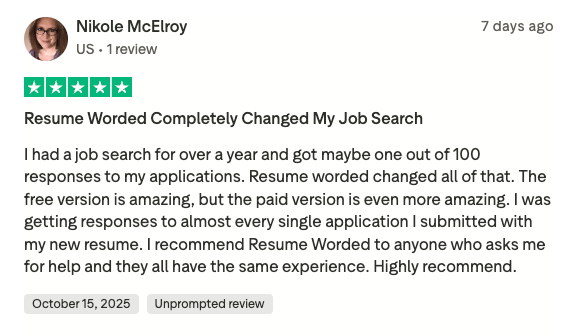
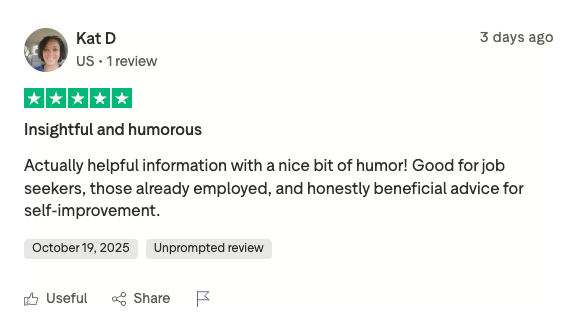
Here’s a review of my last email. Leave one here. You’ll be in good company :-)
If you missed it last week, see it here.
And if you’re new here, join at Coached.com to get the next one
Until next time,

Rohan
Founder at Coached & Resume Worded