Hi, friends! It's Rohan with your latest Coached, your personal coaching email that takes a few minutes to read, but contains stuff that will speed up your career by years.
We all want to be taken seriously at work and in life. But sometimes, the things we say can quietly chip away at our credibility. In today's Mentor's Corner, I'm sharing some common phrases that might be costing you more influence than you realize.
To regular readers: I set aside a big part of my week to write these emails and to make sure they’re high quality. Similar advice from a personal coach would cost you a lot. But, I don't ask for $. Instead, my ask is simple:
If you know someone who’s job searching, tell them about Resume Worded. They can get a free resume review here. It’ll make their search quicker.
If you learn something new from any of my emails, tell someone about them.
Estimated read time: 4 minutes 10 seconds
What's your resume's score?
Backed by 5m+ users


📈 Mentor's Corner
Insights put together by me. One practical lesson a week that will make a measurable impact on your career, delivered right to you — for $0.
Things you say that'll lose you credibility
Credibility is about being trusted and seen as good at your job. It's what makes people believe in you, listen to you, and follow your lead.
I like to say credibility is your professional “currency.”
The more credibility you have, the more trust people put in you. That means you get to do more important work, lead bigger teams, and get promoted more often.
And when you have less credibility, it's tough to get your team to listen or agree with you, or seniors to trust you. It makes your job much harder.
The tricky part? Some credibility killers aren't obvious. You might be accidentally undermining yourself with phrases that seem harmless.
Here's what to watch out for.
😕 “Does that make sense?”
I used to be pretty bad with this one.
When you’re giving a presentation, it’s tempting to say, “Does that make sense?” a lot.
The problem: It signals you're seeking validation and signals underconfidence. You're asking people to confirm you communicated well enough, which puts doubt on everything you just said. (Did Steve Jobs ask, “does that make sense?” while unveiling the iPhone?)
Ditch it. Along with stuff that makes you sound uncertain — like: "Am I being clear?" "Did I explain that okay?".
Instead, just see if people have any comments/questions when you’re done:
Good: “Ok, that was a lot to take in there. Is there anything I can revisit?”
😏 BUT here's when hedging actually works
When you genuinely don't know something, being direct about it builds credibility.
Say you’re a customer support rep in a technical meeting: "I don't have an engineering background, so I might not have the full context — but I've had three enterprise deals stall specifically because we can't do single sign-on. Is that something we could prioritize?”
You're acknowledging your knowledge gap while still contributing something useful.
The key: Be direct when you have conviction (like when giving a presentation). Be upfront when you don't.
…by the way, if you use LinkedIn, go to my profile and hit the ‘Follow’ button. I share a mix of practical career strategy and mid-week motivation — stuff that makes it easy to keep your career on track.
Topics coming up this week: Real examples of good and GREAT networking emails, hacks that have made me a better public speaker, and how to sound more confident (even if you’re an introvert). See you there.
alright, let’s get back to my essay…
😕 Underselling beats overselling every time
The biggest credibility killer with experts: exaggerating what you've done or what you know.
I've sat in meetings where someone pitches themselves as having "deep expertise" in an area, then says something that reveals they've barely scratched the surface. The expert in the room clocks it instantly, and that person's credibility is shot.
Here's the pattern I've noticed: People who are genuinely impressive rarely lead with their credentials. You find out later they sold a company or built something significant. People who aren't impressive do the opposite - they front-load all their achievements, name-drop constantly, and talk in superlatives.
🐺 Always crying “wolf”
Over-exaggerating problems will make you lose credibility at work.
For example:
If you’re a manager and you’re constantly telling your sales team that every potential deal is “make or break” for the company, you’re slowly etching away at your credibility. When a seriously large deal comes your team’s way, your attempts to rally support and resources won’t be taken seriously enough.
Similarly, if each time you run into an issue at work and bring it up in team meetings as a big deal, you’re gonna make a name for yourself as the person who makes mountains out of molehills. Then, when something actually is really bad, you’re going to be the “boy who cried wolf”.
Of course, you might need to sometimes complain about, or exaggerate, some things to get what you want at work. But, keep things measured.
🤐 Avoid self-deprecation!
Self-deprecating lines like “I’m such a klutz at this” or “Aha I keep messing this up, but…” can chip away at how seriously people take you.
With friends or family, it might feel endearing; at work, people who don’t know well you might form the wrong impression of you.
What it implies: “I don’t trust my own knowledge or perspective, so you shouldn’t either.”
What to do instead: If you’re making a guess, say, “Here’s my take—feel free to poke holes in it.” That’s direct yet open to feedback, and it doesn’t undermine your own credibility.
📅 Stick to meeting commitments
I had a senior manager who was chronically late. Not just by 5 minutes, but often 20, 30, or he'd even miss meetings. Worse, he'd let his disregard spill over into the next meetings, often causing those to start late or run over too.
And sure, no one in his team said anything. But we all had little respect for his word. Among us, he had no credibility => lower professional currency.
No matter how senior you are, don’t take people’s time for granted:
If you’re going to be late, send a quick note in advance.
If you’re running a meeting, stick to the time you scheduled in. If you need more time, explicitly ask if everyone can stay longer.
Your word matters (not just at work, but in life). Don’t get into the habit of not sticking to it.
And that’s a wrap. if you did enjoy reading this email…
(I don’t ask you for a lot….rather, these emails are expensive to send out, yet I keep them free and don’t paywall the best parts)
All I want in return is one small favor. Just do any of these:
1. Know someone on a job search? Tell them about Resume Worded.
It’ll make their job search a lot shorter. They can get a free resume review at resumeworded.com/free-resume-review
2. Got a smart friend who LOVES getting better? Tell them about Coached.
I love seeing them reach people who want more out of their careers. If you want to share this essay with a friend, or colleague, here’s a link to it: https://coached.com/essays/credibility-killers/ - I promise to keep the quality of my emails high so they love you for it.
3. Leave a quick review for Coached.
You get ideas that change your career for the better. In return, a short 30-second review would make me feel good about spending the time to write this. I think it’s a fair trade. Do it here.

🔎 Speed Up Your Job Search
One actionable piece of advice to help you hack your job search.
The resume mistake that makes you sound junior (even if you're not)
Look at these two resume lines:
❌ Managed social media accounts and increased engagement
✅ Grew company Instagram from 800 to 2,500 followers in 4 months by posting 3x weekly and collaborating with industry accounts
Same work. One sounds like an intern task, the other sounds like someone who knows what they're doing.
The difference? Specificity.
Most resume bullets are vague because people think they need to keep things general. But vague bullets make hiring managers skip right past you.
Here's another example:
❌ Led team to complete projects on time
✅ Led team of 5 analysts to deliver quarterly reports 3 days ahead of deadline, allowing senior leadership extra time for strategic planning
See the difference? The second set actually shows what you accomplished. When hiring managers see bullets like these, they stop and think "I need to talk to this person."
You likely have these details somewhere - team sizes, timelines, growth numbers, actual impact. You just don't know how to frame them, which is totally normal if you're not used to writing resumes.
Feel free to steal these examples and tweak them for your own resume. BUT, here’s an even smarter idea:
Upload your resume here and let our AI rewrite all your bullets with your actual details. It’ll also catch other mistakes you don’t realize you’re making.
Takes about 30 seconds. Might actually get you interviews.
Stop applying to jobs with a bad resume!
Optimize it once for free.
🤭 In all unseriousness
🤣 BTW: you shouldn’t be writing your cover letter from scratch anymore. Instead, for a real, actually good cover letter, use this AI cover letter tool. It’ll write cover letters that actually have personality and don’t sound like AI — unlike ChatGPT.
Try it just once for a job you actually want — see how good it is for yourself.
🫵 Before we wrap up
What'd you think of today's edition?
🤢 You didn't bring enough value.
Here’s a review of my last email. Leave one here. You’ll be in good company :-)
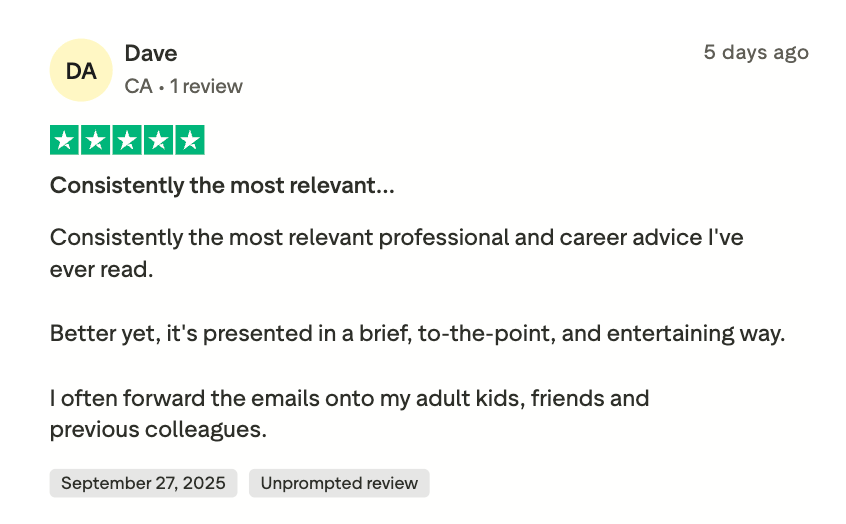
thank you SO much Dave!
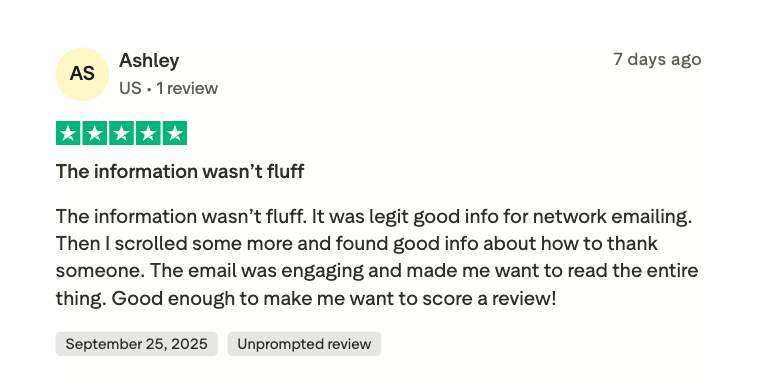
so glad you enjoyed last week’s Coached :)
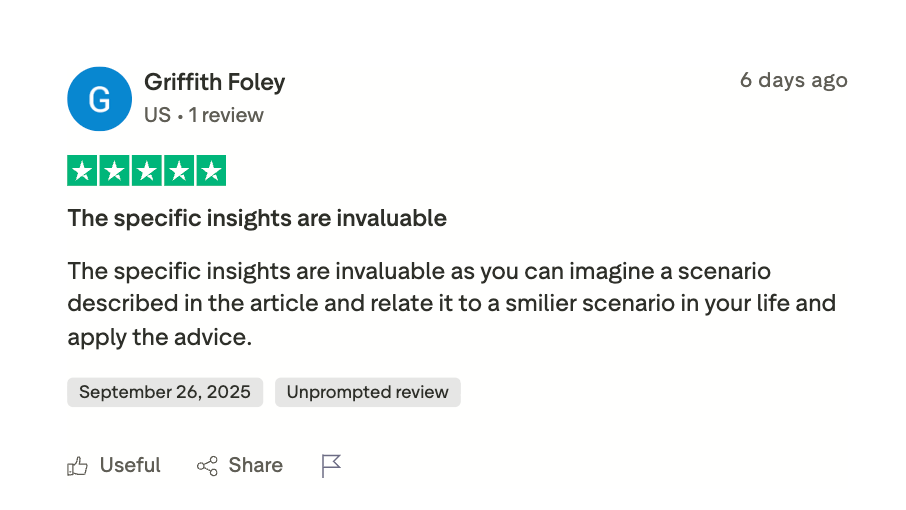
glad the examples I used were relatable! appreciate the review
If you missed it last week, see it here.
And if you’re new here, join at Coached.com to get the next one
Until next time,

Rohan
Founder at Coached & Resume Worded