A huge part of your career (and life, honestly) depends on random conversations:
- Airbnb started because after a design class, Joe Gebbia went up to speak to Brian Chesky, who became his co-founder.
- A friend of mine struck up a conversation with someone at a mutual friend’s birthday party — they now have two kids.
- Or even personally: One of my closest friends and collaborators today is someone I randomly started talking to at a coffee shop.
We often emphasize "getting after it" — don't be shy, chase down opportunities, put yourself out there. And that's important.
But there's another side to this that's criminally underrated:
How approachable you seem to others.
Because no matter how driven or proactive you are, many life-changing conversations only happen if people feel comfortable walking up and talking TO YOU.
Be honest:
On a scale of 1-10, how comfortable is it to strike up a conversation with you?
If you’re below a 3?
You’re probably nuking your chances of those random lucky interactions that could take you places, kinda like…
🤔 My 3/10 boss
An old boss I had was a really smart guy. He was really good at what he did. Nice guy when you got to know him.
But, he always looked angry.
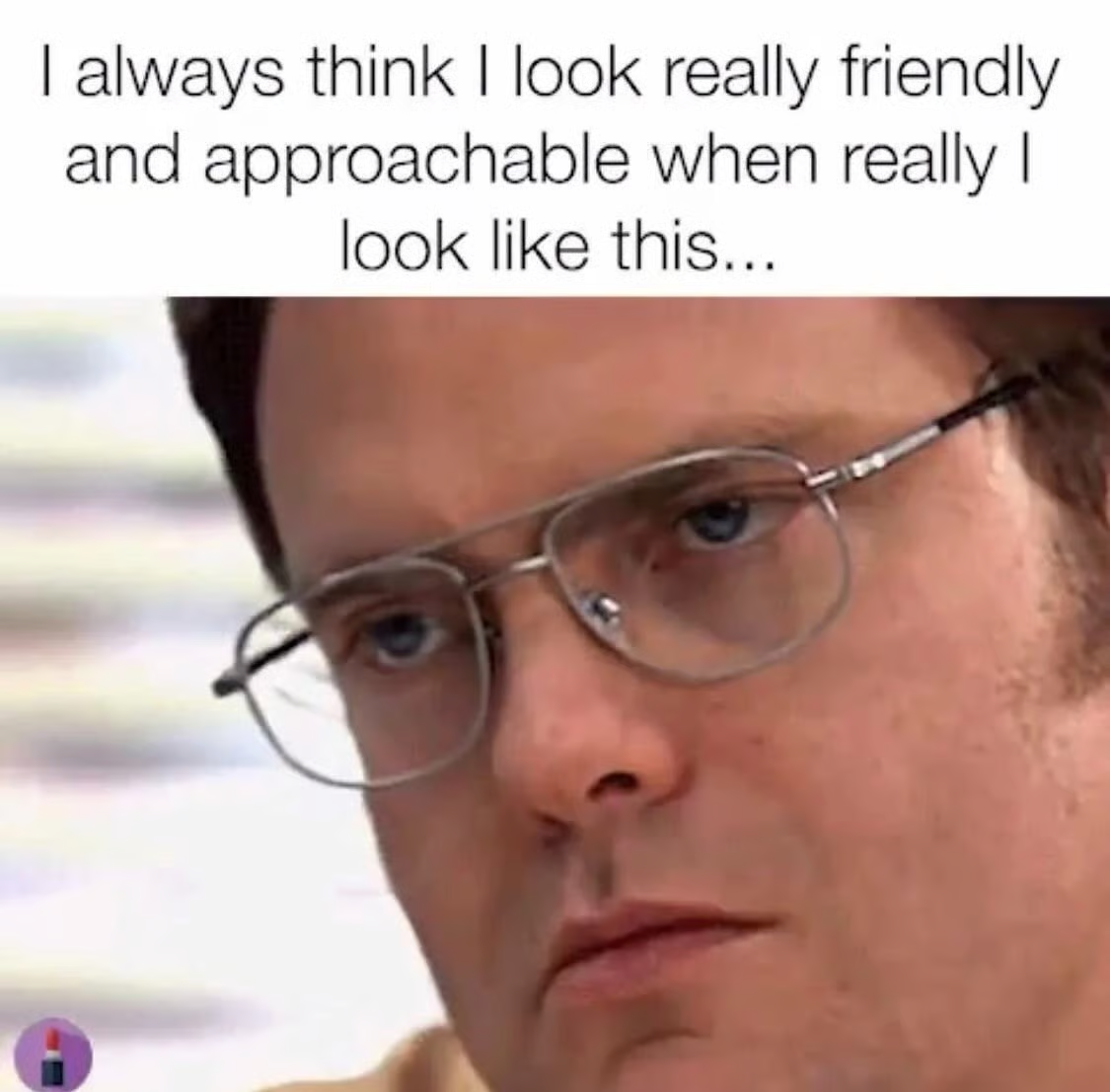
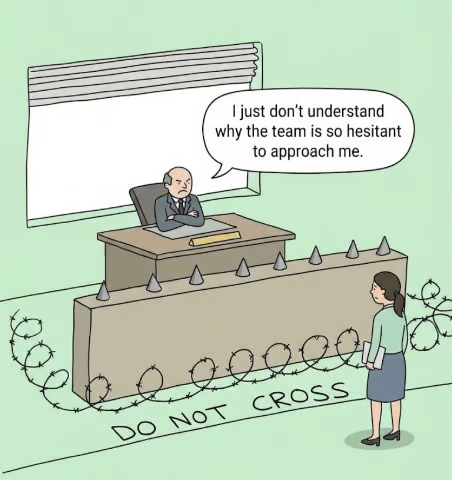
So, nobody really spoke to the guy. People would literally say later: "I was too scared to ask him questions" or “I don’t think he’d be open to the idea”.
Think about that:
How many conversations, opportunities & relationships did his “unapproachability” cost him over his 40-year career?
100?
1,000?
10,000?
So remember…
🤔 Your scowl isn’t cheap
Unapproachability doesn’t show up as one big failure. It’s more a hidden tax. For example, someone sees you and briefly thinks of inviting you into a promising conversation…but holds back because you seem tense or preoccupied.
Now, obviously, I'm not suggesting you should invite endless interruptions or meaningless chats into your day. Too approachable can also become a distraction.
But there’s a sweet spot, especially if you’re at one extreme. Here’s how to get there.
😑 Revamp your resting face
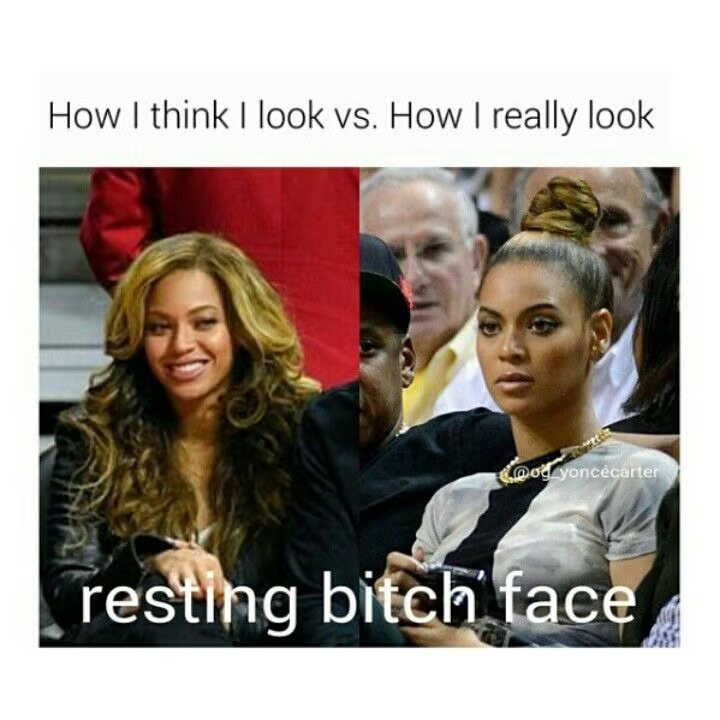
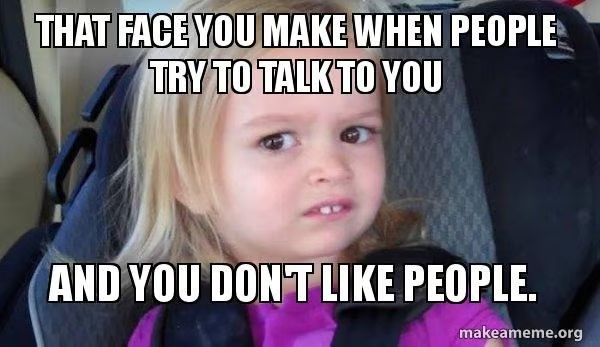
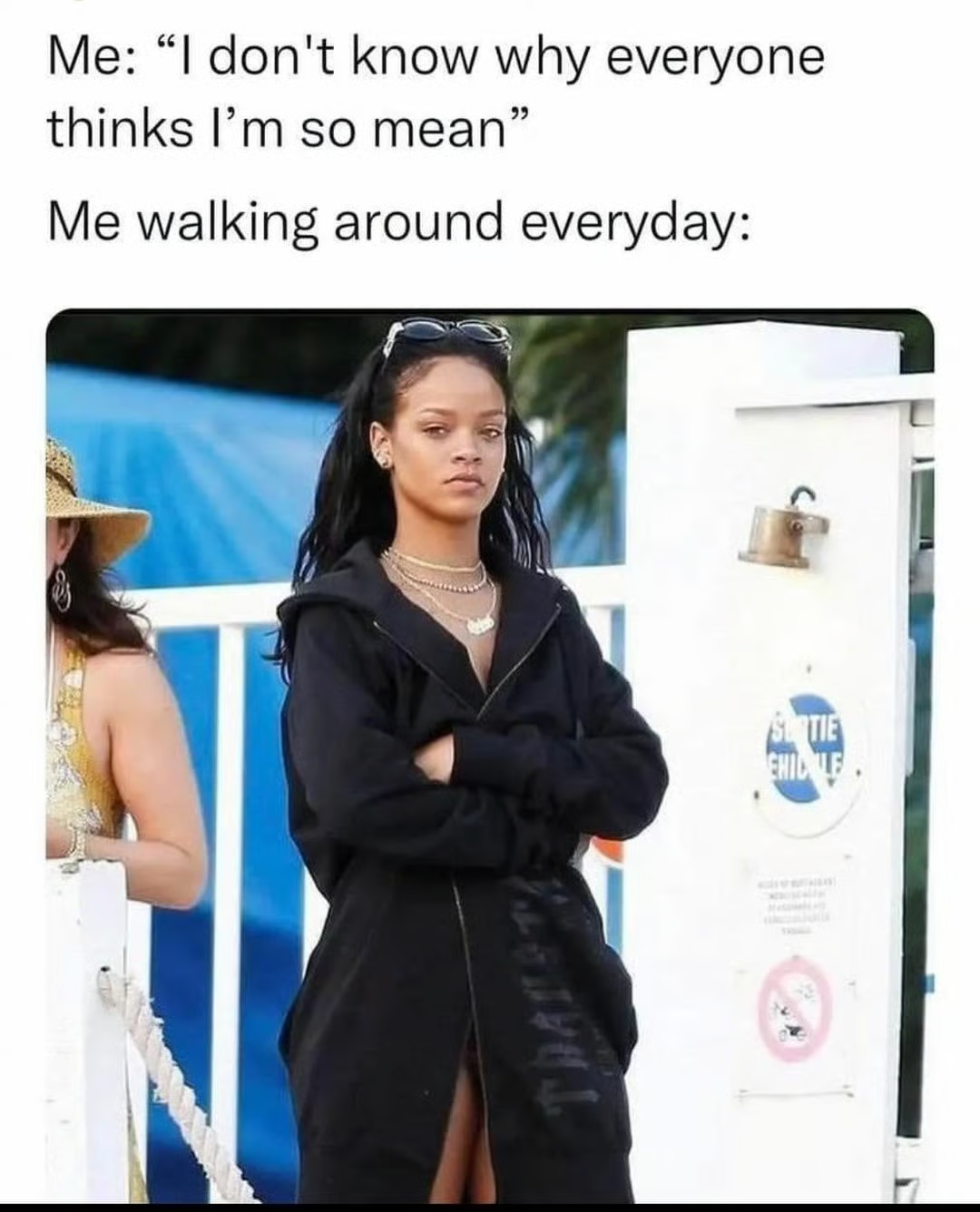
In pop culture, there’s the term “Resting B* Face”, or RBF for short.
From Wikipedia:
“RBF is a facial expression that unintentionally creates the impression that a person is angry, annoyed, irritated, or contemptuous, particularly when the individual is relaxed, or resting.”
Obviously, that’s what we wanna avoid.
Next time you’re standing in line (e.g., waiting for coffee), glance around. Most people's neutral expression looks super pissed off. You'd hesitate before approaching most!
So, do the opposite: Be a little more aware of what your neutral expression looks like — at work, at events, at gatherings.
👁️ Craft your calling card
Question:
If someone calls your name, what do you do?
Punish them with a grunt, side-glance or a dull, “Huh” or “What?”
Or reward them by chirping back a warm, “Hey, what’s up Sarah?”
Remember: In every interaction, we’re teaching people how to treat us the next time. Want to be approachable? Make them feel good for approaching you.
🤸 What’s your body saying?
When you walk through the office, is your head up, making eye contact, greeting people with an occasional nod or smile? Or are you head-down, trying to get to your cubicle with the least amount of human contact possible?
During meetings are your arms always crossed? Are you leaning forward slightly, signaling openness? At conferences, are you slouched over, staring at your phone?
This might be Obvious-Adams but…
If it looks like you don’t want to be approached, people won’t approach you.
On the flip-side…
An open body invites people to be open back.
Because your next big opportunity often starts from someone feeling comfortable enough to say: “Hey, got a minute?”
🌍 Approachability matters on LinkedIn too
A friend who’s a partner at a big VC firm told me that the first advice they give new associates — whose entire job depends on meeting founders and sourcing deals — is to explicitly make their LinkedIn profile approachable.
For example, adding friendly phrases like: "Always happy to jam about startups in fintech." or "Love hearing from founders working on productivity tools."
It sounds minor, but these little cues signal openness, making it easier for others to reach out - which is exactly how many great opportunities start.
So:
If you haven’t yet, optimize your LinkedIn profile using this tool. It’ll help you craft an engaging narrative that’ll make more people want to reach out.